Columbia Asia
Healthcare Experience
Transforming the Digital Healthcare Experience Across Web & Mobile Platforms
The Columbia Asia Patient Portal was designed to simplify healthcare accessibility through a seamless digital ecosystem. The platform focused on improving patient engagement, appointment booking, doctor discovery, and medical accessibility across responsive web and mobile experiences.
Project Overview
Columbia Asia aimed to modernize the healthcare experience by creating a unified digital ecosystem for patients across web and mobile platforms. The project focused on simplifying healthcare accessibility, improving appointment workflows, and delivering a more intuitive patient experience.
Role
Platform
Industry
Duration
Responsibilities
• User Flows
• Wireframing
• UI Design
• Design System
• Responsive Design
• Tools: Figma
The Challenge
Healthcare Platforms often Overwhelm Users with Complex Experiences
Patients frequently struggle with fragmented healthcare journeys, unclear appointment systems, confusing navigation, and inconsistent digital experiences across devices. The challenge was to create a simplified, trustworthy, and accessible healthcare ecosystem for users of different age groups and technical skill levels.
Key Challenges
- Complex navigation structures
- Complicated appointment workflows
- Scattered healthcare information
- Difficulty finding specialists
- Accessibility limitations for elderly users
- Inconsistent experience across devices
- Lack of trust and transparency
Project Goals
Key Goals & Objectives
Simplify Patient Journeys
Create intuitive navigation and appointment workflows that reduce friction for patients.
Improve Accessibility
Ensure the platform remains usable for users across different age groups and technical skill levels.
Build Patient Trust
Use clear visual hierarchy, healthcare-focused UI patterns, and accessible content presentation.
Enhance Service Discoverability
Help users quickly find doctors, hospitals, physiotherapists, dietitians, and healthcare services.
Research & Discovery
Key Goals & Objectives
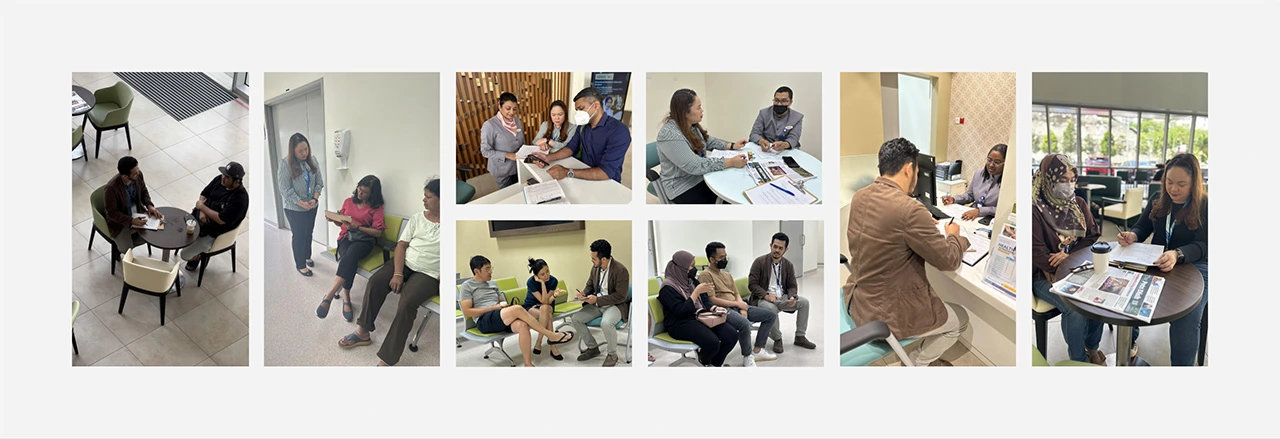
Description
To better understand patient behavior and healthcare expectations, research was conducted through surveys, stakeholder discussions, competitor analysis, and journey evaluations.
The research phase focused on identifying:
• Patient pain points
• Healthcare accessibility issues
• Booking frustrations
• Navigation difficulties
• Trust-related concerns
Research Activities
• User Surveys
• Stakeholder Interviews
• Competitor Analysis
• User Journey Mapping
• Behavioral Observation
• UX Audit
Survey Results & Key Insights
Overview
- Participants: 15 (Patients, Columbia Asia Staff, Doctors)
- Gender: 5 Male, 10 Female
- Location: Columbia Asia Bukit Jalil
Highlights
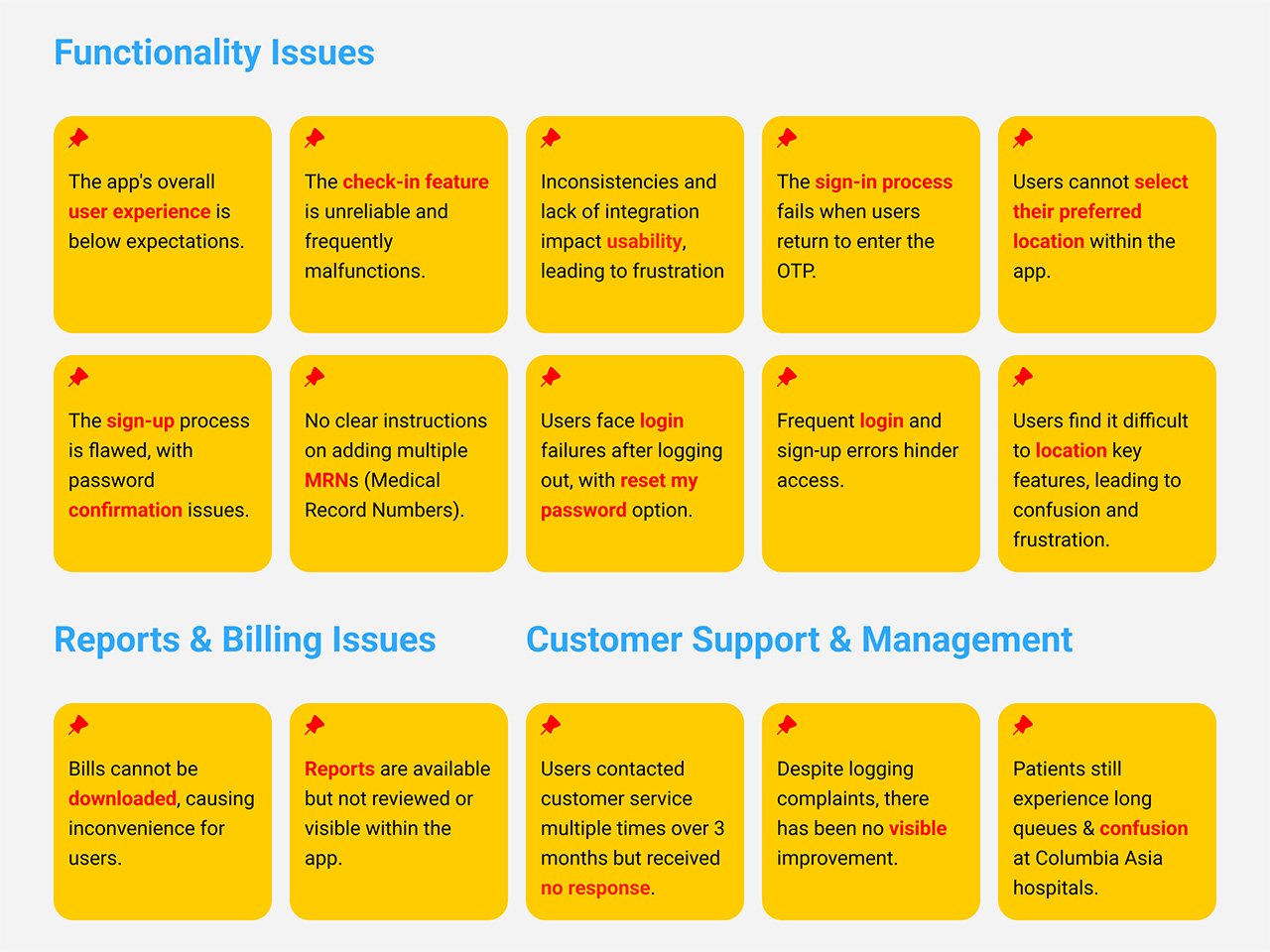
- Lack of Awareness: Patients and staff were not aware of the hospital app.
- Communication Gap: Appointment confirmation SMS was not received by users.
- Missing Details: Some users received confirmations but without time details.
- Support Issues: Patients did not know the right contact number for inquiries.
- Limited Features: Users could only view reports but not MRI scans.
- Waiting Time: Patients experienced long waiting times at the hospital.
Organizing Pain Points into Categories
Competitor Analysis Screens
Key Opportunities from Competitor Apps
Examined leading healthcare apps (Sunway Hospital, MyHealth 360, Doctor Anywhere, Practo) to identify UX opportunities:
Sunway Hospital
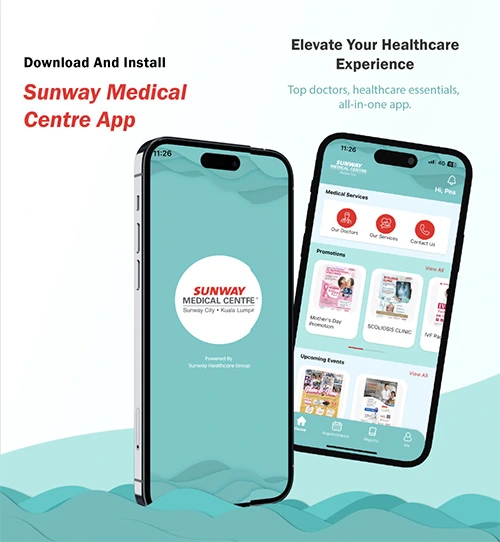
Key Opportunities
- Engaging Dashboard: The Sunway Hospital app integrates promotional healthcare packages and health-related videos to enhance user engagement.
- Intuitive Navigation: A bottom navigation pattern ensures quick and easy access to key features.
- Appointment Management: Users can conveniently view their upcoming, past, and canceled appointments in one place.
- Doctor Favorites: The app allows users to mark doctors as favorites, making it easier to revisit preferred healthcare providers without searching again.
My Health 360
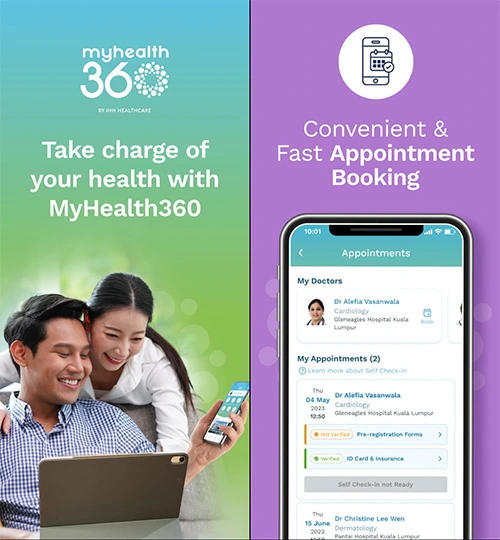
Key Opportunities
- Comprehensive Dashboard: My Health 360 enhances user experience by centralizing key features—appointment booking, medical records, health tracking, bill management, and a personal health planner—all accessible from the dashboard.
- Streamlined User Journey: By reducing the need to navigate multiple menus, the app ensures a seamless experience, allowing users to manage their health efficiently.
- User Empowerment: Features like health data tracking and easy access to medical records encourage users to take a proactive role in managing their well-being.
- Engagement-Driven Design: A well-structured dashboard improves usability and keeps users actively engaged with the platform.
- Effortless Navigation: The implementation of a bottom navigation pattern enhances accessibility, providing quick access to essential functions with minimal effort.
Doctor Anywhere
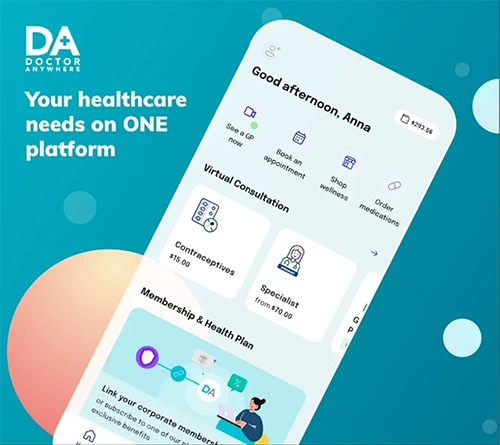
Key Opportunities
- Seamless Sign-Up & Login: Users can easily sign up or log in via Google, Facebook, or email.
- Location-Based Convenience: The app auto-detects users’ locations and populates nearby Columbia Asia hospitals and doctors, making it easier to find healthcare providers.
- Multi-Language Support: Users can select their preferred language right from the first screen, enhancing accessibility.
- Intuitive Navigation: A bottom navigation pattern ensures quick and effortless access to key features.
- Streamlined Appointment Booking: The app categorizes appointment options, reducing cognitive load and simplifying the selection process.
Practo
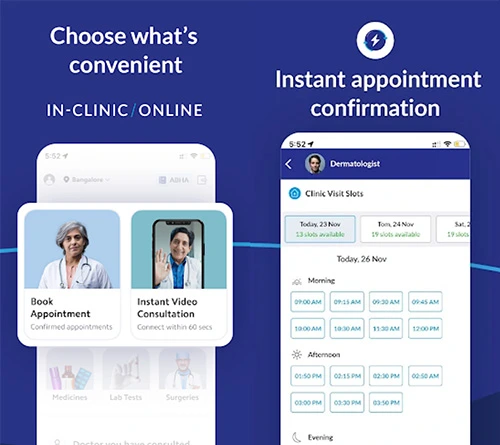
Key Opportunities
- Effortless Sign-Up: Practo prioritizes speed and convenience by offering a frictionless sign-up process. Users can register with just their mobile number and name, enabling quick access to doctors and healthcare services.
- Seamless Exploration: The app employs an infinite scroll pattern on the homepage, showcasing a wide range of healthcare services, offers, surgery categories, symptoms, and specialties. This intuitive design allows users to browse effortlessly without navigating multiple pages.
User Personas

Lisa Cheng
Business Analyst,
38 Years, Married, Malaysia
Lisa Cheng is planning her first medical checkup. She wants to visit the nearest hospital and book an appointment conveniently.
Quick process & affordable healthcare
Good reviews for trust and reliability
Easy scheduling system
- Difficulty finding the right specialist quickly
- Confusing appointment booking process
- Lack of transparent healthcare information
- Long waiting times and delayed confirmations
- Difficulty managing healthcare activities across devices
- Unclear follow-up communication after appointments
- Book appointment within a few minutes
- Easily discover nearby hospitals and doctors
- Receive instant appointment confirmation
- Access healthcare information without confusion
- Smooth mobile experience across devices
- Reduced waiting time during patient journey
- Book appointment within a few minutes
- Easily discover nearby hospitals and doctors
- Receive instant appointment confirmation
- Access healthcare information without confusion
- Smooth mobile experience across devices
- Reduced waiting time during patient journey
Key Insight
Lisa values convenience, trust, and speed when managing healthcare activities. She prefers a simple digital experience that allows her to quickly discover healthcare services, schedule appointments effortlessly, and receive clear communication throughout her medical journey.
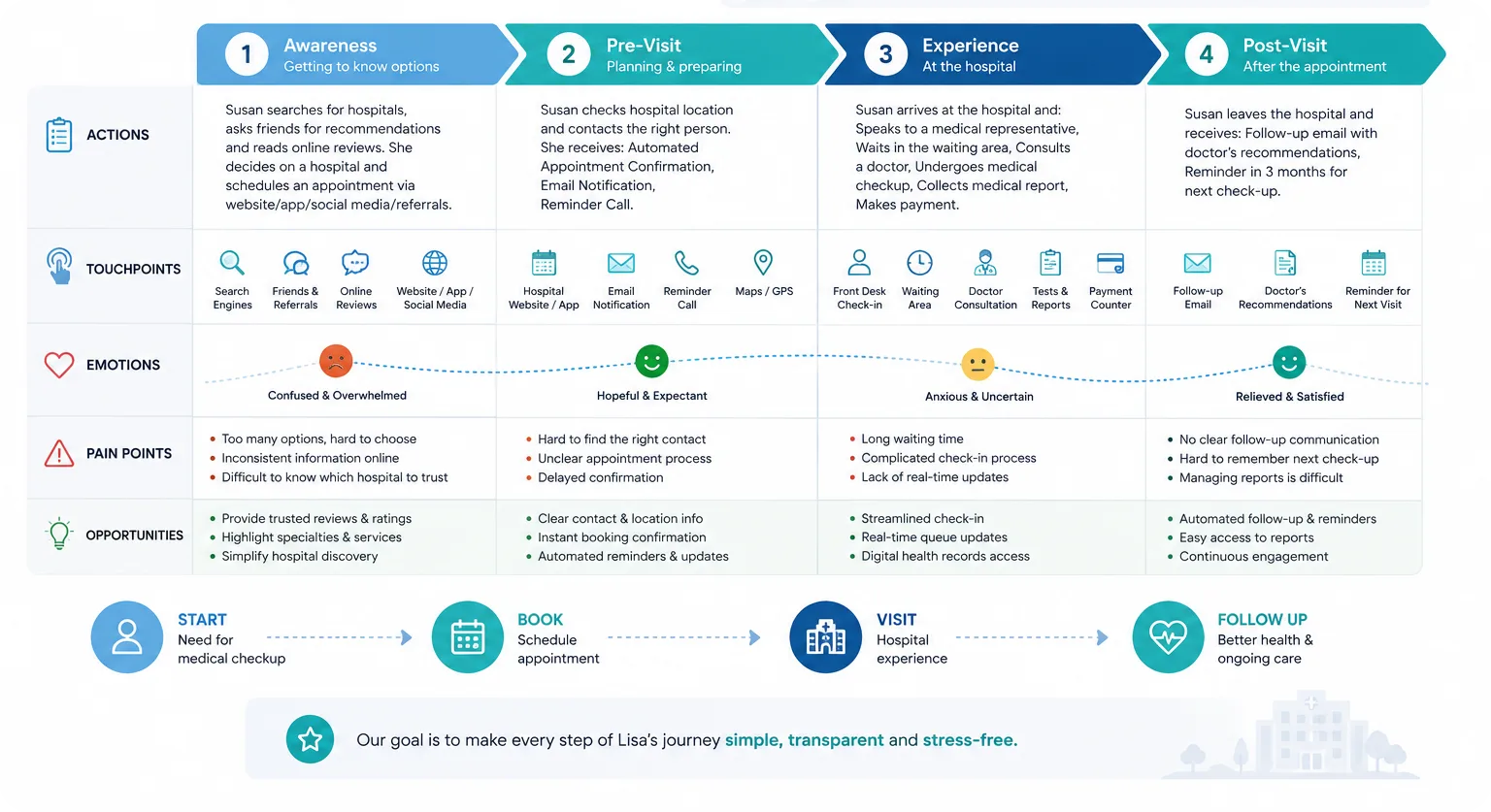
User Journey Map
Patient Journey Mapping
A comprehensive patient journey map was created to identify user emotions, frustrations, touchpoints, and opportunities throughout the healthcare experience.
The mapping process helped uncover:
- Delays during appointment booking
- Confusion during service discovery
- Navigation pain points
- Lack of workflow visibility
This exercise helped redesign the experience with a more user-centered approach.
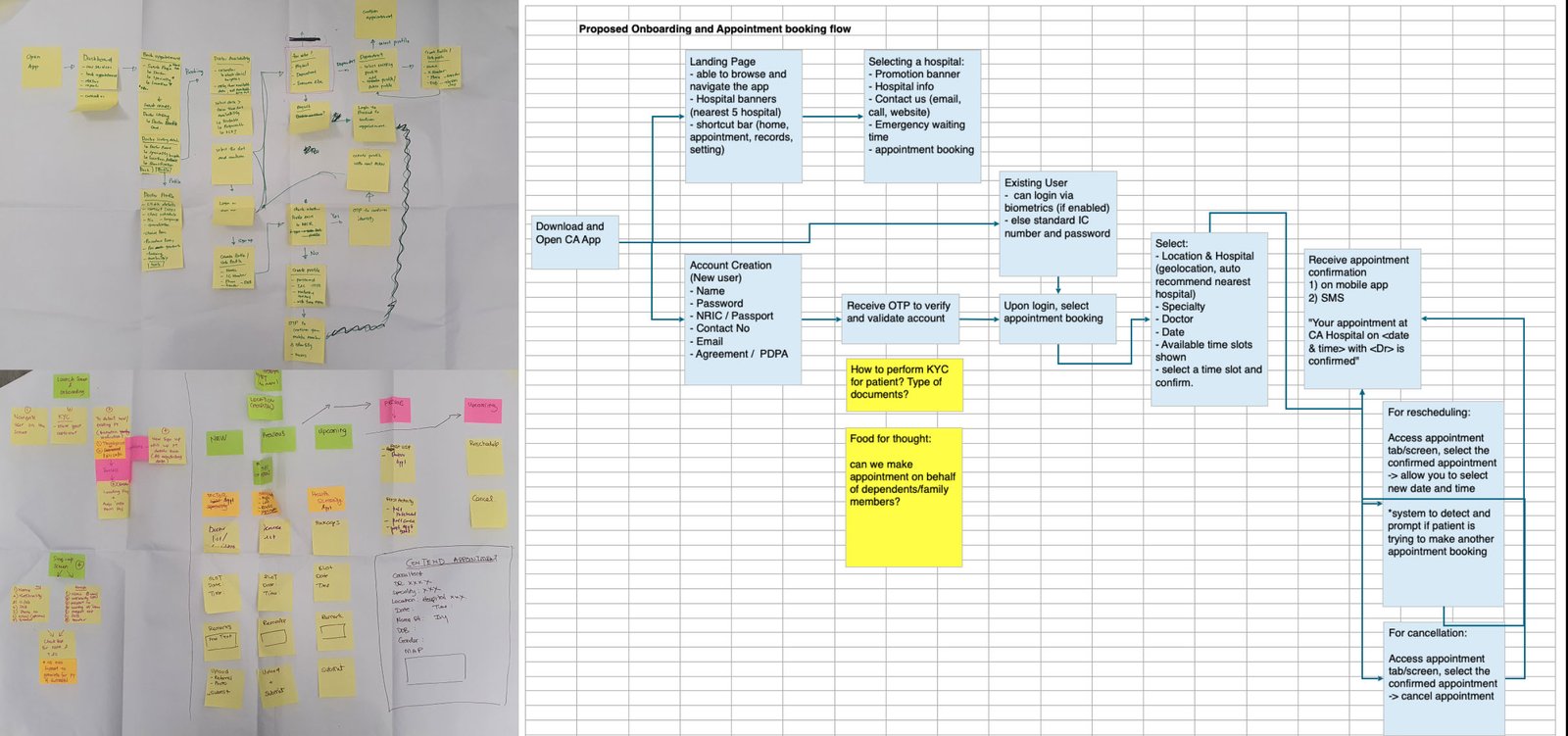
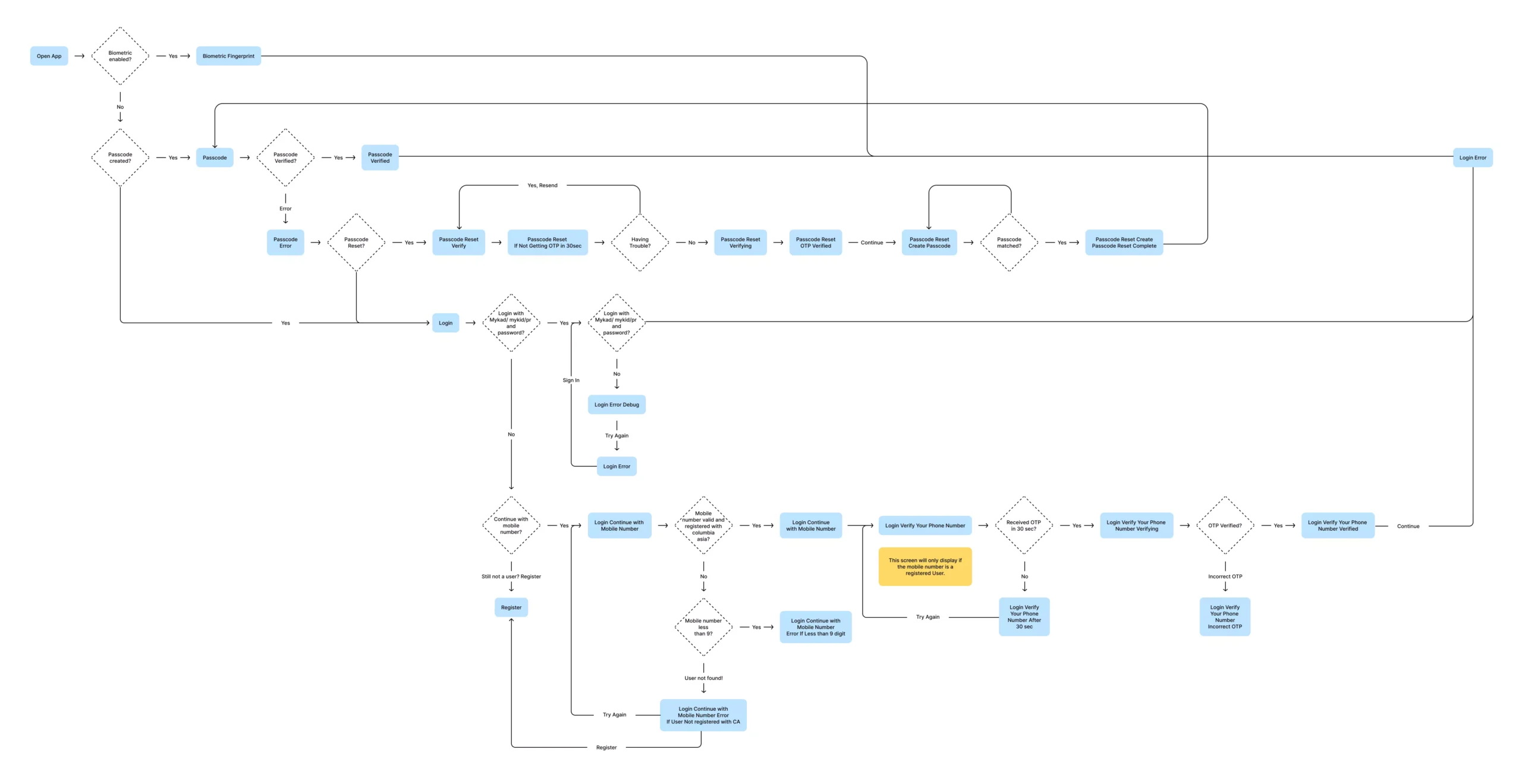
User Flow & Workflow
Detailed workflows were created to simplify task completion and improve healthcare interactions across multiple patient scenarios.
The workflows focused on:
- Appointment booking
- Doctor discovery
- Patient onboarding
- Profile management
- Healthcare service exploration
Key Improvements
- Reduced navigation complexity
- Faster task completion
- Clearer interaction pathways
- Better workflow consistency
- Simplified user decisions
Onboarding

Login
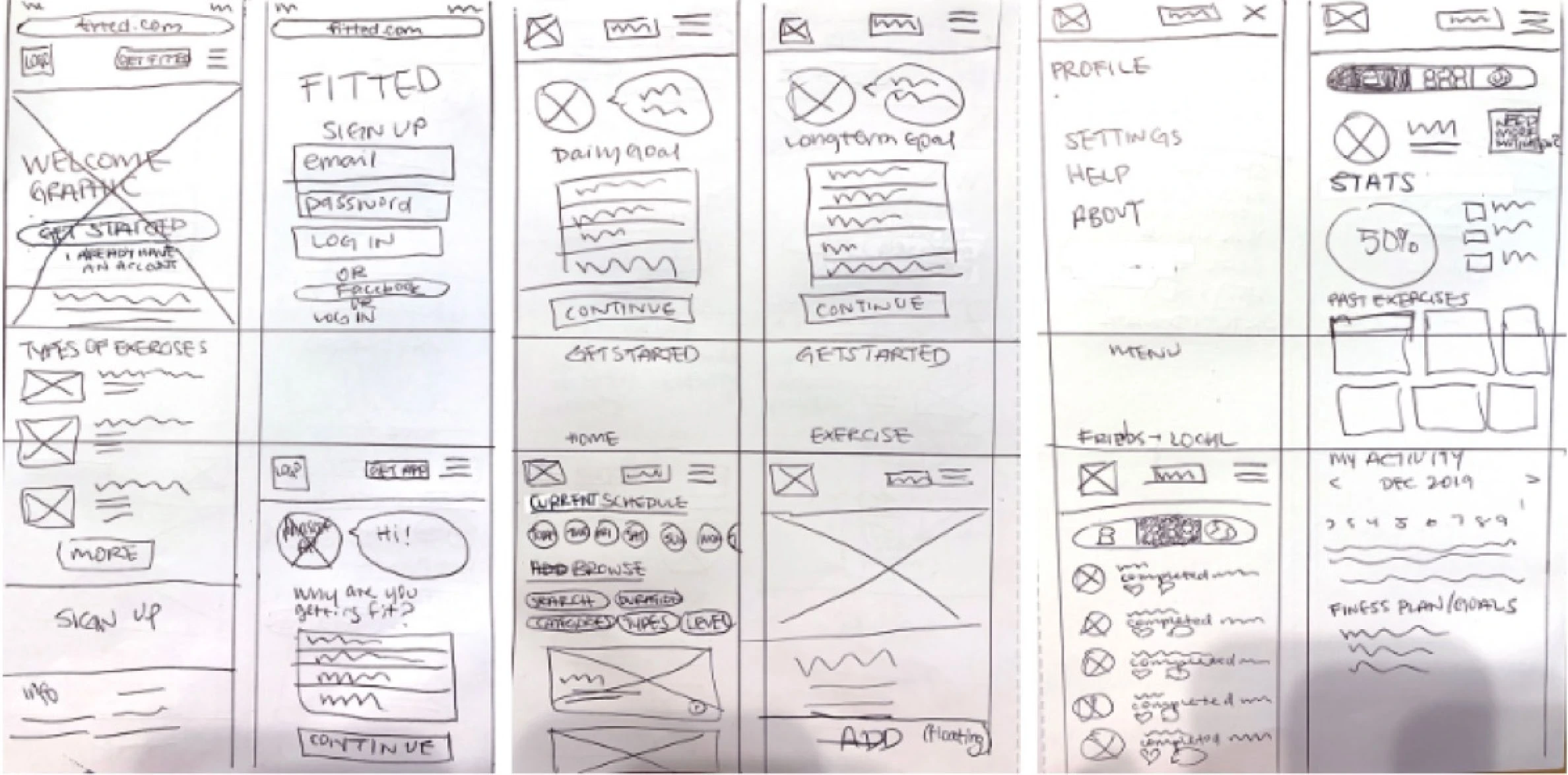
Sketch
Information Architecture
Information Architecture
The platform architecture was restructured to improve discoverability and reduce navigation complexity.
Primary categories were organized around:
• Hospitals
• Doctors
• Physiotherapists
• Dietitians
• Healthcare services
• Patient resources
Wireframes & Iteration
Low-fidelity wireframes were created to explore navigation structures, appointment flows, content organization, and responsive behavior across multiple screen sizes.
Several design iterations were tested to:
- simplify task completion
- improve visual clarity
- optimize mobile usability
- reduce user friction
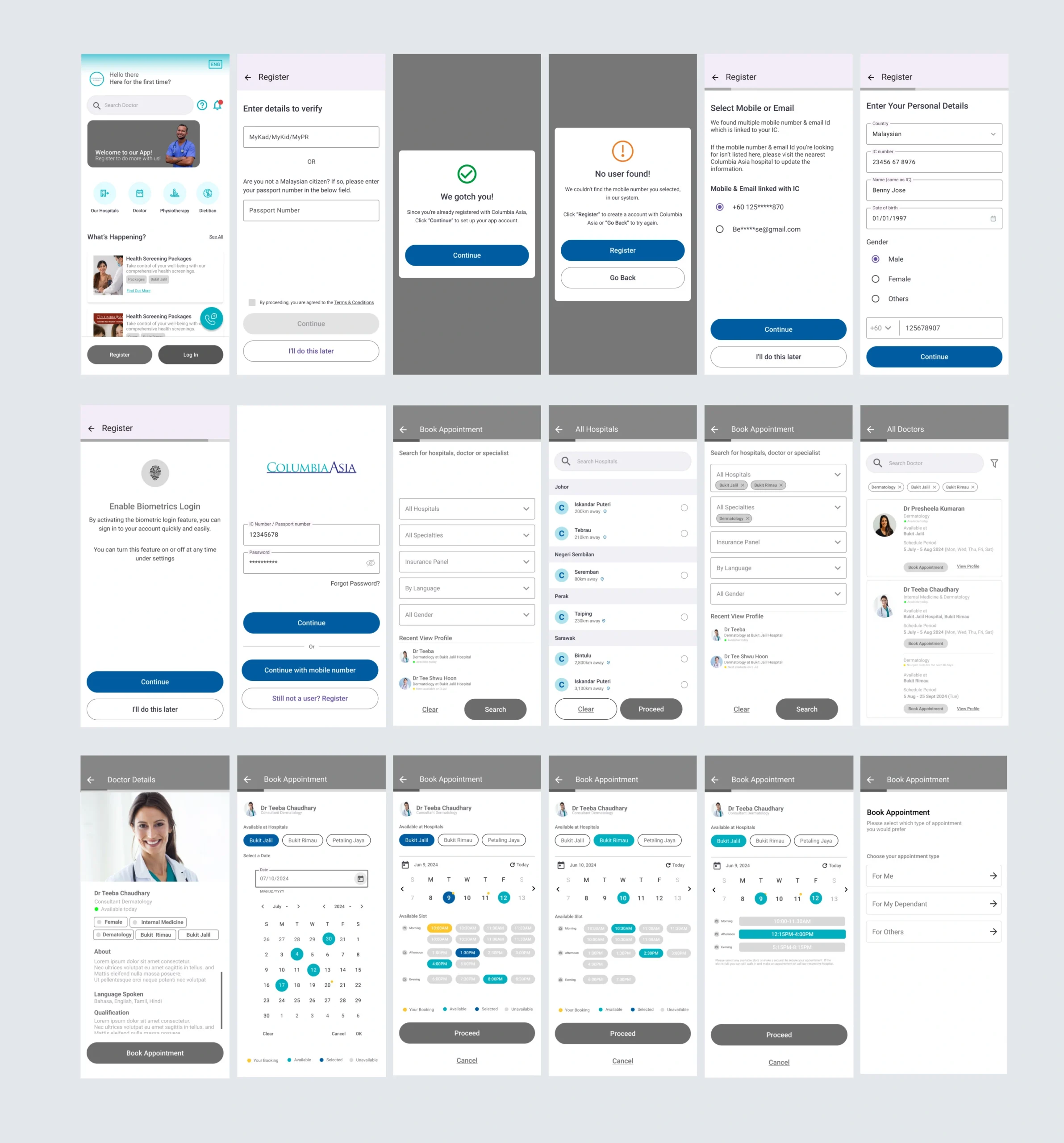
High-Fidelity Screens
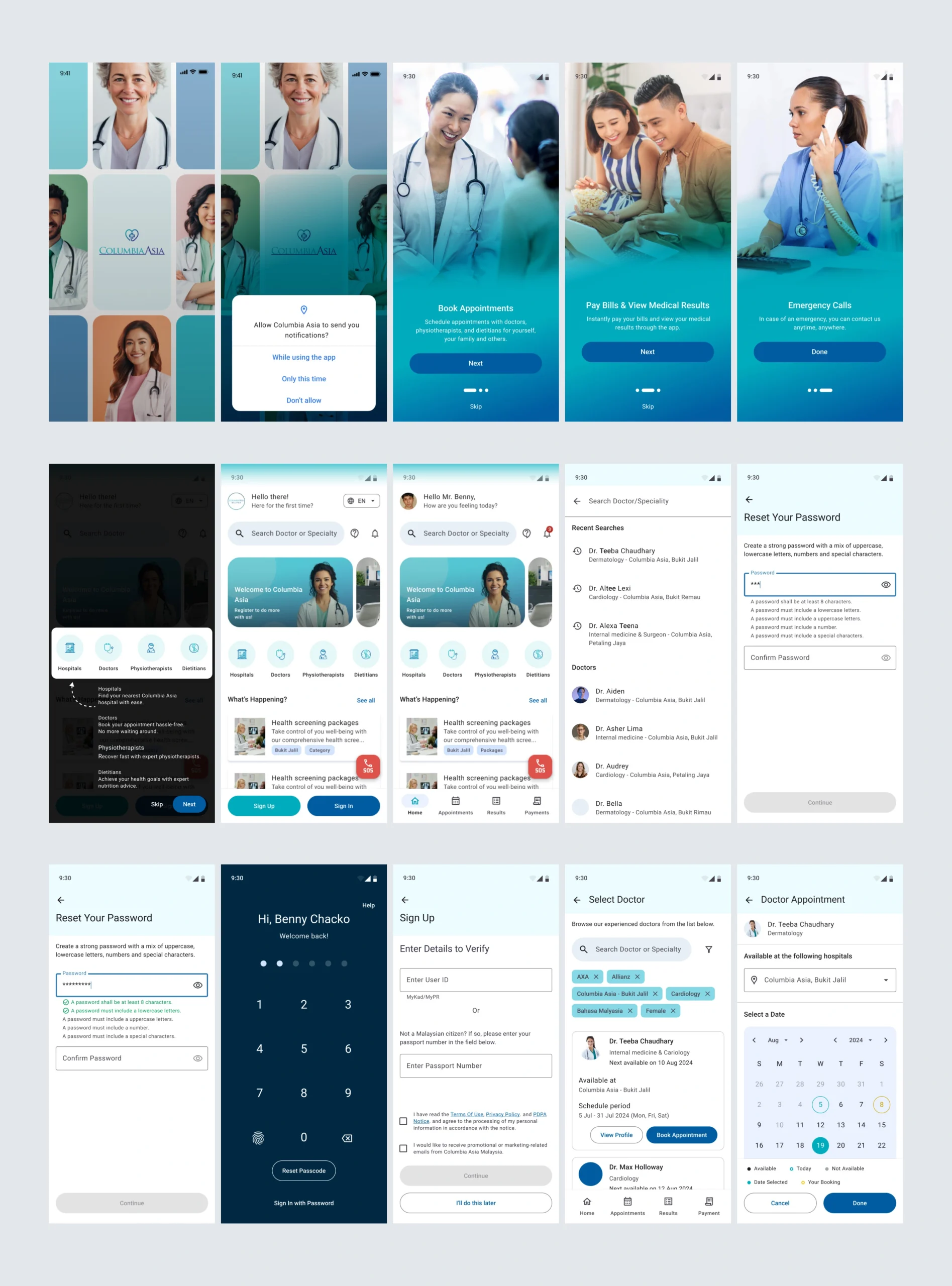
Outcome & Impact
The redesigned healthcare platform created a more intuitive and accessible patient experience by improving:
- Navigation clarity
- Appointment accessibility
- Service discoverability
- Mobile usability
- Healthcare engagement
The final experience aligned business goals with user expectations while delivering a scalable healthcare ecosystem.
Key Learnings
Designing healthcare experiences reinforced the importance of:
- Accessibility-first thinking
- Simplified interaction design
- Trust-centered UI patterns
- Responsive healthcare ecosystems
- Balancing operational workflows with patient usability
This project strengthened my understanding of designing scalable enterprise healthcare experiences across multiple platforms.